
 GET A QUOTE

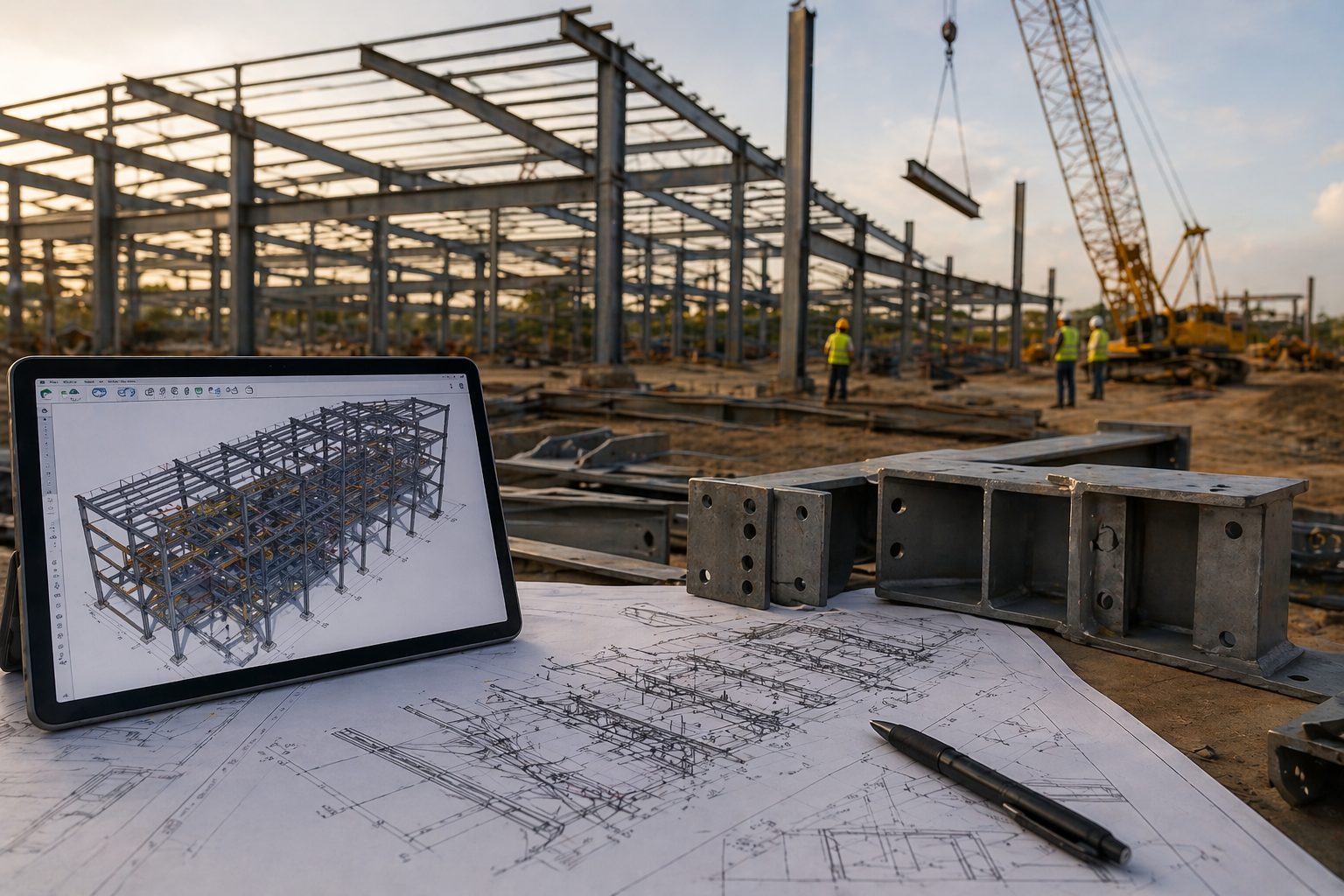
Steel detailing is the bridge between structural design and physical construction. It translates engineer-approved design intent into fabrication-ready shop drawings, erection drawings, and material lists that fabricators, erectors, and site teams rely on daily. The quality of steel detailing directly determines how smoothly fabrication runs, how efficiently erection proceeds, and how many RFIs delay the project.
Yet steel detailing is often treated as a downstream task  something that happens after the "important" design work is done. In reality, poor detailing is one of the most common causes of fabrication errors, site delays, and programme overruns in steel construction.
A complete steel detailing package includes shop drawings showing individual member geometry, connection details, and weld or bolt specifications; erection drawings showing how members are assembled in the field; a Bill of Materials (BOM) or Material Take-Off (MTO) for procurement and fabrication scheduling; and anchor bolt plans coordinating with concrete works below.
Each drawing must be clear, dimensionally accurate, and consistent with the structural engineer's design intent. Any ambiguity  a missing weld symbol, an unspecified bolt grade, or an unlabelled part mark  becomes an RFI that stalls the workshop or the site.
--- VHS Engineering Team"Steel detailing is not administration  it is engineering communication. A complete, accurate detailing package is one of the most valuable project deliverables a structural team can produce."
VHS Engineering uses Tekla Structures for 3D structural modelling and shop drawing production. Our detailing workflow begins with a thorough review of the engineer's design model and drawings, followed by model development, connection detailing, and internal review before drawings are issued to clients or directly to fabricators.
Every drawing package goes through a multi-level checking process: dimensional verification, connection check against design calculations, and coordination check against any applicable BIM or architectural information. Revision management is tracked to ensure fabricators always hold the current issue.
Effective steel detailing requires active communication with the fabricator. Each workshop has preferred detailing conventions  standard bolt spacings, preferred plate dimensions, welding processes  that, when incorporated into the detailing, improve shop efficiency and reduce cost. VHS Engineering engages with fabricators early in the detailing process to align on these preferences without compromising structural performance.
This collaborative approach shortens the approval cycle, reduces the number of RFIs, and produces a fabrication package that the workshop can execute confidently and efficiently.